Key Takeaways
- AI marketing delivers the highest ROI when applied to specific, high-impact functions first rather than deployed across every channel at once.
- Your AI outputs are only as reliable as the data you feed in, so audit tracking, attribution, and data sources before deploying any AI system.
- Build a human review layer into every AI-powered process because AI does not understand brand nuance, cultural context, or the downstream cost of a bad creative decision.
- Treat AI as a long-term capability investment: assign ownership, monitor performance, and update your tools as your audience and market conditions evolve.
- GetHookd gives performance marketers a single platform to research competitor ad strategies, produce AI-powered creative, and make data-backed scaling decisions from their Meta ad account.
Where AI Has the Biggest Impact in Marketing
Most performance marketing teams already know the areas where AI is supposed to deliver: ad creative production, audience targeting, competitive intelligence, performance analysis, and personalization. The gap isn’t awareness; it’s execution.
The teams seeing the strongest returns aren’t deploying AI everywhere at once. They’re identifying the specific functions where manual workflows are creating the most drag—slow creative iteration, reactive competitor monitoring, lagging performance decisions—and replacing those bottlenecks first.
The sections below break down how each area works in practice and what strong execution actually looks like, so you can identify where AI will move the needle fastest for your setup.

GetHookd: Turn Competitor Intelligence Into Your Next Winning Ad
GetHookd reveals which ads your competitors are actively scaling—not just running. Spy on their best-performing creatives, landing pages, and traffic strategies, then turn proven concepts into testable campaigns in seconds with AI-powered script generation and creative cloning.
What You Get:- ✓ Brand Spy to decode competitor ad strategies in real-time
- ✓ AI script generation and ad cloning for instant variations
- ✓ Performance scoring based on actual ad behavior, not vanity metrics
- ✓ Creative Analyzer to identify and scale your top performers
GetHookd: Turn Competitor Intelligence Into Your Next Winning Ad
65M+ Ads Analyzed | 4.8★ G2 Rating | 4.5★ Trustpilot Rating
Stop Guessing. Start Scaling:
GetHookd reveals which ads your competitors are actively scaling—not just running. Spy on their best-performing creatives, landing pages, and traffic strategies, then turn proven concepts into testable campaigns in seconds with AI-powered script generation and creative cloning.
What You Get:
- ✓ Brand Spy to decode competitor ad strategies in real-time
- ✓ AI script generation and ad cloning for instant variations
- ✓ Performance scoring based on actual ad behavior, not vanity metrics
- ✓ Creative Analyzer to identify and scale your top performers
AI Marketing Best Practices: How to Get It Right From the Start
1. Start With a Specific Use Case & Clear KPIs
Trying to deploy AI across every function at once is a reliable way to see results in none of them. Pick the area where your team spends the most time manually or where performance gaps are most visible, and start there.
Before you open any new tool, define what success looks like in specific numbers. Without concrete KPIs tied to your use case, you have no way to know whether the AI is actually working.
For teams that need support beyond individual campaigns, bringing in outside expertise can help build a more coordinated pipeline strategy across channels.
2. Audit Your Data Quality Before Deploying AI
AI amplifies whatever you feed it, including bad data. Duplicate contacts, stale email lists, and broken attribution don’t get fixed by an AI layer on top.
Before deploying any AI system that relies on historical data or behavioral signals, audit your key data sources for completeness and accuracy. It is unglamorous work, but it is the single most important thing you can do to make sure your AI outputs are worth acting on.
3. Keep Human Oversight in Every AI-Driven Process
AI can analyze faster and optimize at a scale no human team can match, but it does not understand brand nuance, cultural context, or the downstream implications of a bad creative decision.
Build a review layer into every AI-powered process. This does not mean checking every output manually. It means setting standards, regularly spot-checking, and ensuring a human is always accountable for what goes out the door.
4. Treat AI as an Ongoing Investment, Not a One-Time Fix
Deploying an AI tool is not a finish line. Models need monitoring, retraining, and updating as your audience shifts and market conditions change. For businesses that need AI capabilities tailored to their specific workflows, custom AI development can also provide a more flexible foundation than relying solely on off-the-shelf tools.
A predictive model built on last year’s data can degrade quietly while your conversion rates slip. Budget for ongoing maintenance alongside initial setup, and assign clear ownership of each AI system to someone responsible for tracking performance and flagging when results drift.
5. Set Realistic Expectations Across Your Team
AI marketing tools are genuinely powerful, but they are not instant. They will not double revenue overnight or eliminate the need for skilled marketers.
When expectations are inflated, teams rush implementation and draw premature conclusions. Treat the first 60 to 90 days of any AI rollout as a calibration period, not a results period. The teams that get the most from AI are the ones patient enough to build it right before scaling it.
Real-World Examples of AI in Marketing
The clearest way to understand AI marketing strategies is to see them in action. These are the approaches marketing teams are deploying right now, across industries and budget sizes.
Personalization at Scale
AI has made it practical for performance marketers to move beyond broad audience segments and serve messaging that reflects where someone is in the buying journey.
Dynamic product ads pull from your catalog and automatically show each user the items most relevant to their browsing or purchase history. Landing pages can now adapt headline copy, imagery, and offers based on the ad a visitor clicked, reducing the disconnect between creative and destination that quietly kills conversion rates. Building and maintaining that kind of adaptive infrastructure at scale is rarely a one-person job, which is why many brands partner with a white label web development agency to handle the technical build behind these personalized experiences.
The same logic applies to the ad creative itself. Rather than running one version of an ad to a broad audience, AI tools enable teams to produce and test multiple creative variations across different audience segments simultaneously.
AI-Powered Content Creation
AI tools can significantly increase the volume of content a marketing team produces, but generating more content is only part of the equation. A strong SEO and content strategy helps ensure those assets are aligned with search demand, audience intent, and long-term organic growth.
A team that once produced 10 content assets per month can produce 50, freeing human writers to focus on editing, strategy, and brand voice refinement.
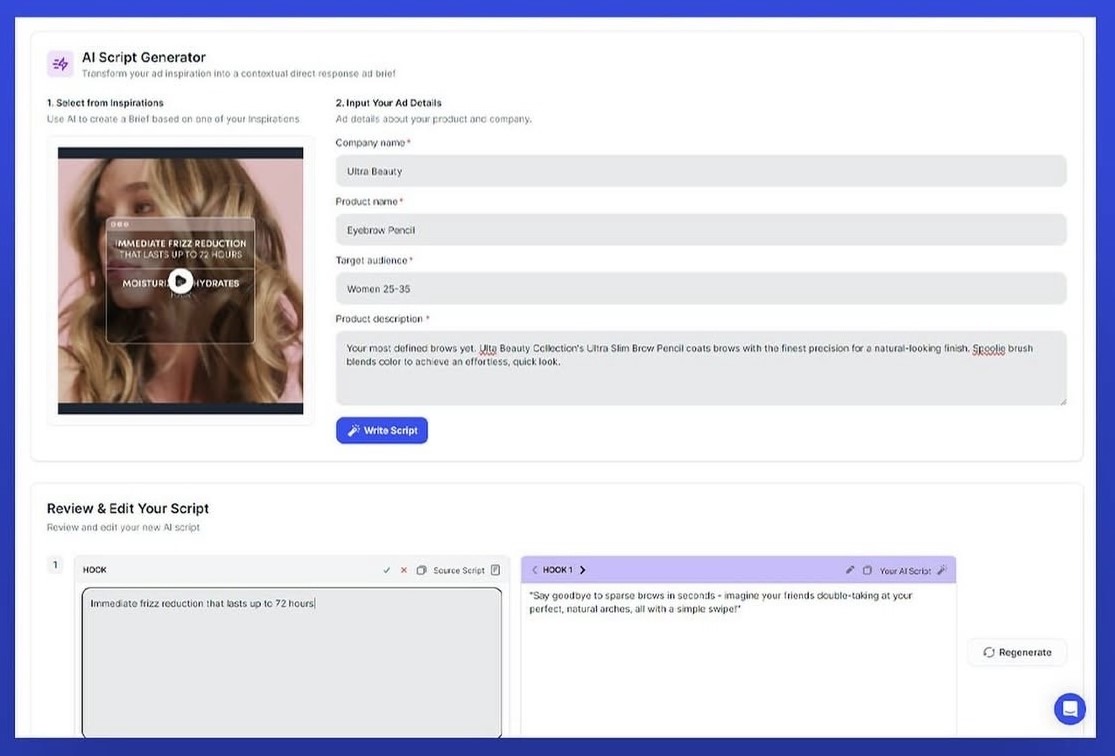
For instance, GetHookd’s Video Scripts feature generates full ad scripts in seconds. Input your product details and target audience, and the tool structures a complete script around proven ad formats, including hook, body, and CTA, so you’re editing toward a finished asset rather than building from scratch.
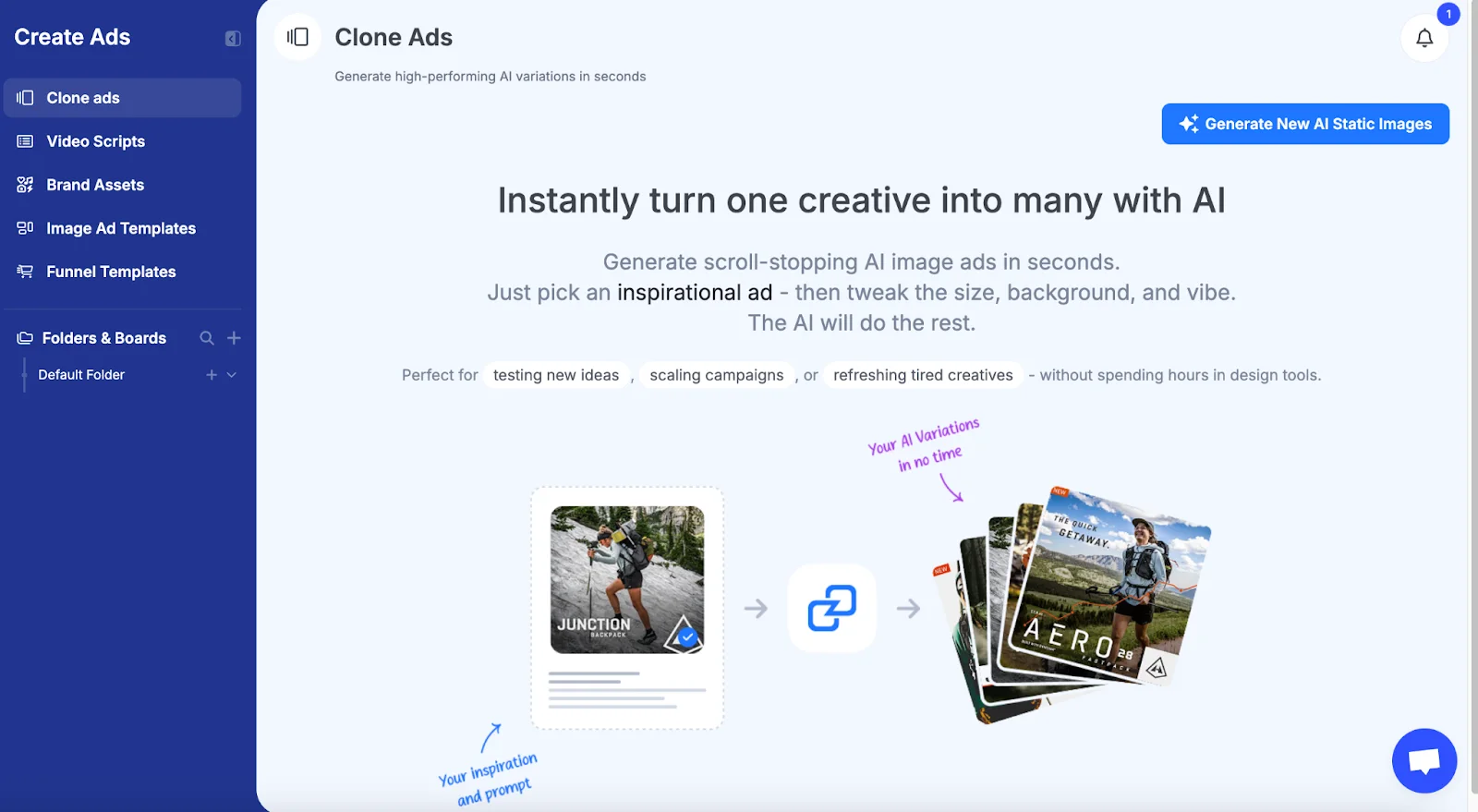
Another example is the Clone Ads tool, which generates multiple creatives with visual variations in minutes, so testing marketing concepts no longer requires a designer or a full production cycle.
Upload your original static creative, and Clone Ads produces styled variations with different layouts, colors, and visual elements, giving your team a ready-to-test creative batch without opening a design tool.
AI-Powered Competitive Research
Most marketing teams spend hours manually tracking competitor activity: scanning websites, monitoring social feeds, and pulling ad library data. AI competitive intelligence tools can automate this entirely, delivering real-time alerts when competitors update their messaging, launch new campaigns, or shift their positioning.
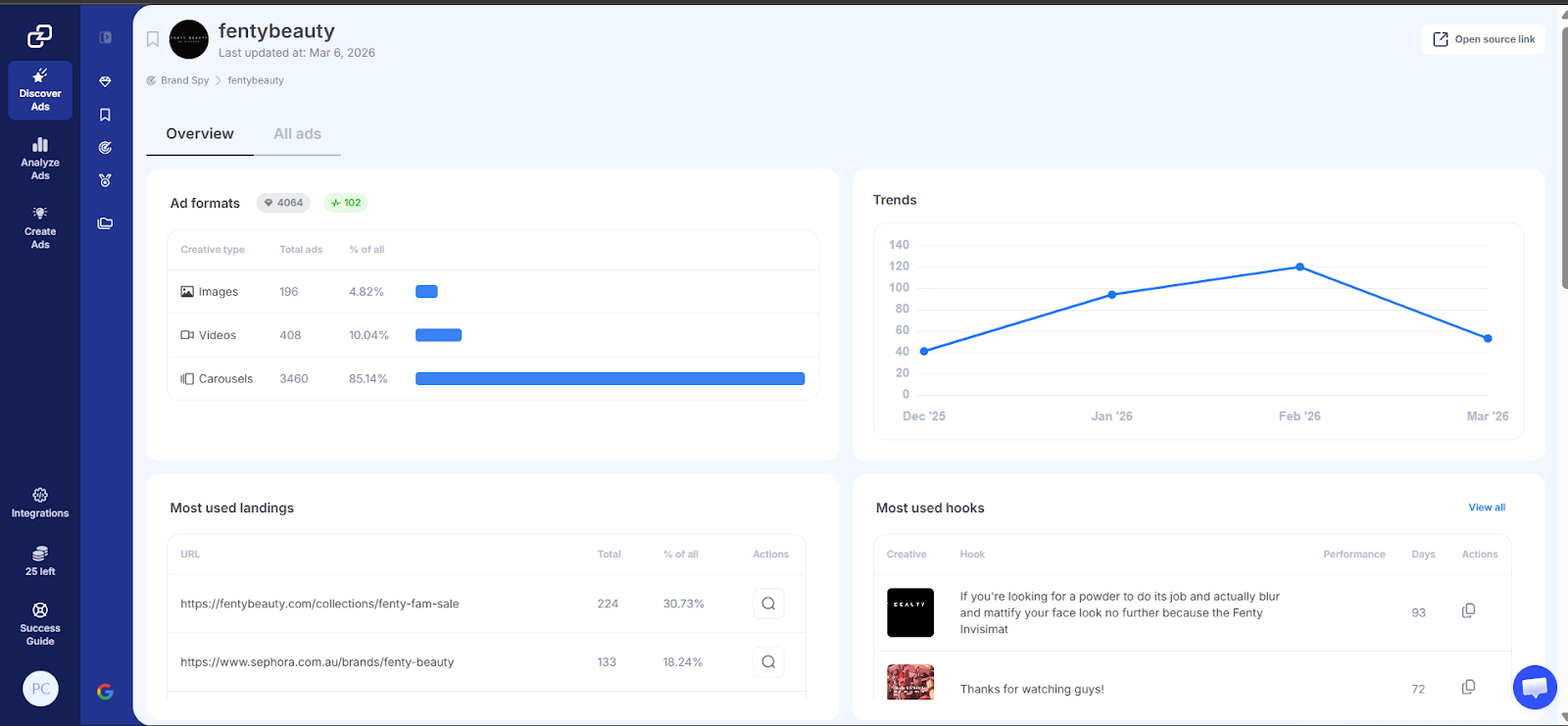
GetHookd’s Brand Spy feature brings this intelligence directly to your creative research. Rather than manually scanning the Facebook Ad Library, Brand Spy shows which creatives competitors are actively scaling, the landing pages behind their top performers, and the hooks they return to consistently, so your team responds to real competitive signals rather than guesswork.
AI for Campaign Optimization & Performance
Real-time campaign optimization is one of the clearest demonstrations of AI’s value in paid media. Rather than waiting for a campaign to run its course before drawing conclusions, AI tools continuously evaluate performance signals, including click-through rates, conversion data, and creative fatigue indicators, then surface adjustments while there is still budget to act on.
Platform-native tools like Meta’s Advantage+ and Google’s Performance Max handle budget allocation and targeting adjustments automatically. But neither solves the problem most teams actually face: understanding performance at the creative level. Which ad is driving results? Which is quietly draining the budget? Without that visibility, scaling decisions are still guesswork.
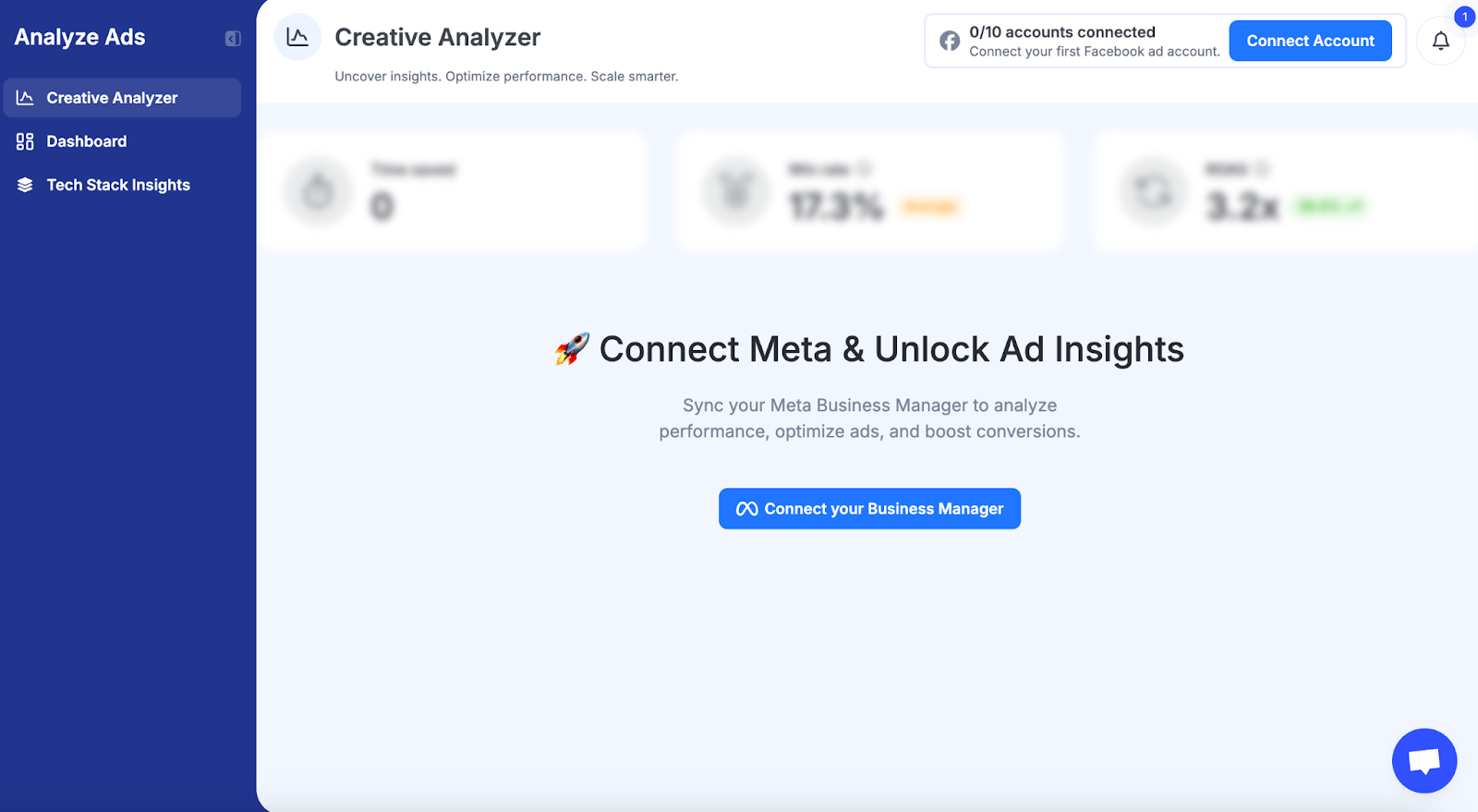
GetHookd’s Creative Analyzer closes that gap. It connects directly to your Meta ad account and identifies exactly which creatives are earning their spend and which aren’t, so every scaling decision is grounded in actual performance data rather than platform-level aggregates that obscure what’s really working.
Build Smarter AI-Powered Campaigns with GetHookd
We built GetHookd for marketers who are done making creative decisions based on instinct alone. Our platform gives media buyers, eCommerce brands, and agencies a single workspace where competitor research, creative production, and performance analysis happen without switching tools or losing momentum between each step.
Most teams waste hours scanning ad libraries manually, briefing designers on concepts that haven’t been validated, and waiting until a campaign has already burned through budget before knowing what worked. GetHookd shortens that entire cycle.
With 65M+ high-performing Meta ads and Brand Spy surfacing exactly what competitors are actively scaling, every creative decision starts from a position of real market intelligence. When it comes to production, our AI tools handle the heavy lifting.
From scripts and hooks to static ad variations, your team moves from a winning concept to a testable campaign in minutes. And once your ads are live, Creative Analyzer connects directly to your Meta ad account to show what to scale, what to cut, and where your next round of testing should focus.
Improve your marketing performance with GetHookd today!
Frequently Asked Questions (FAQs)
What is AI marketing and how does it work?
AI marketing uses machine learning, natural language processing, and predictive analytics to automate decisions and optimize performance across channels. It works by processing large volumes of data, identifying patterns, and using those patterns to make smarter marketing actions faster than any manual process allows.
What are the biggest benefits of AI in marketing?
Time savings and precision are clear benefits of AI marketing. AI handles repetitive tasks such as creative production, audience segmentation, and A/B testing so marketers can focus on strategy. The deeper benefit is scale: a small team can now personalize communications for hundreds of thousands of people without adding headcount, which changes what lean teams can compete with.
How can GetHookd improve my marketing performance?
GetHookd improves marketing performance by giving you a competitive edge before you spend a dollar on production. You get access to 65M+ winning Meta ads, competitor intelligence through Brand Spy, and AI-powered creative tools that take you from research to a ready-to-launch campaign in one platform. Less guesswork, faster execution, and clearer decisions about where your budget should go.
Do I need technical skills to use GetHookd?
No. GetHookd is built for media buyers, agencies, and eCommerce operators, not developers. Everything from competitor research to AI script generation is accessible through a straightforward interface with no setup or technical background required.
*Note: Pricing and/or product availability mentioned in this post are subject to change. Please check our website for current pricing and stock information before making a purchase.